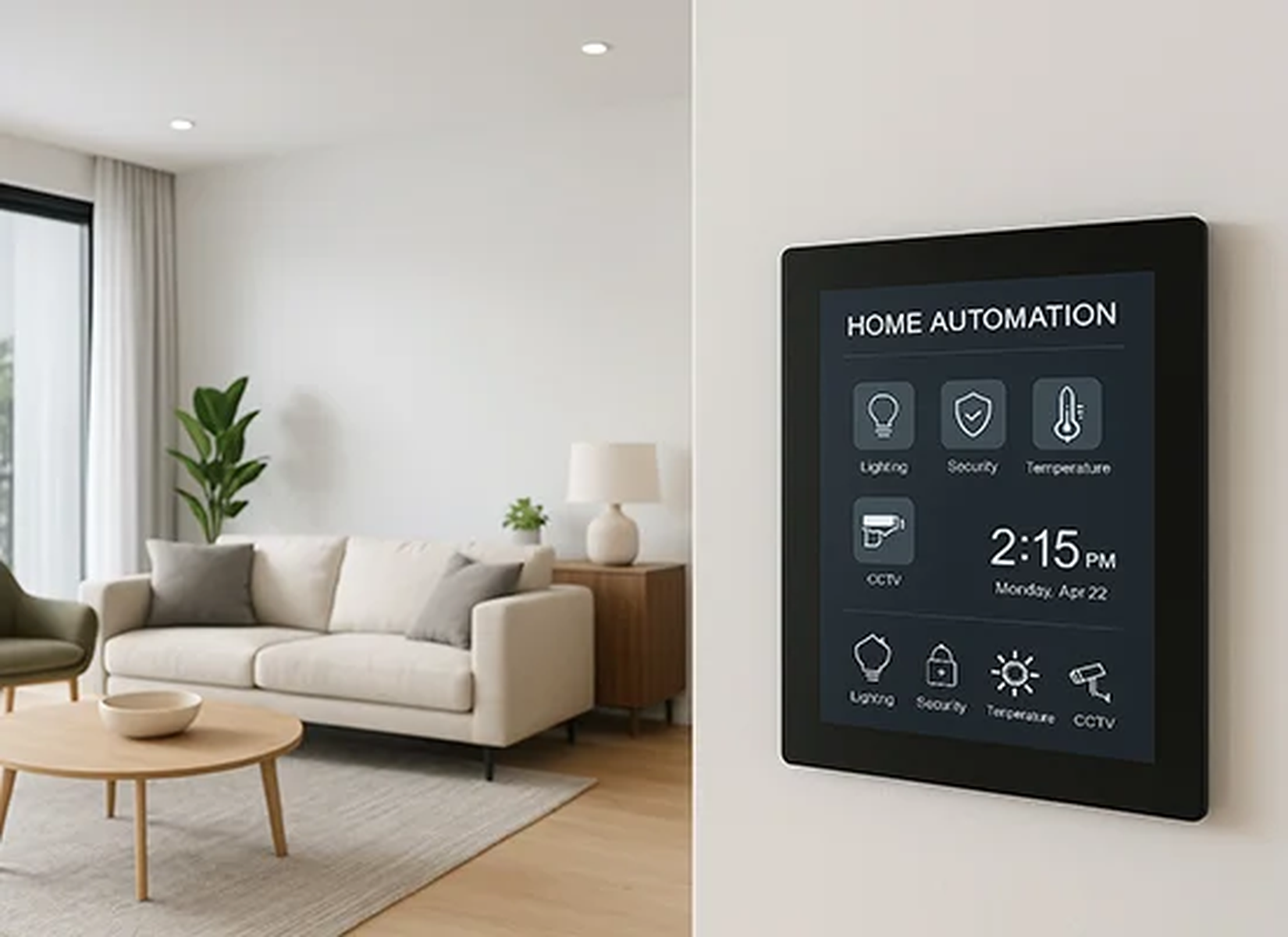
Luxury Smart Home Automation in Los Angeles
Smart home automation integrating comfort, security and efficiency — seamlessly connecting lighting, climate, audio-visual and security systems for a modern, effortless living experience in your Los Angeles luxury home.
A well-designed smart home should feel simple to use even though many systems are working behind the scenes. R Builders coordinates automation infrastructure with architecture, electrical, HVAC, security, audio-video and interior design so technology is reliable, discreet and ready for the way the owner wants to live.
Plan Technology During Design—not After Construction
The best time to plan automation is before framing and rough-in are complete. Equipment locations, wiring pathways, power, ventilation, network access points, shade pockets, speaker locations, camera views and control interfaces all affect architecture and finishes. Late planning can lead to exposed wiring, poorly placed devices or unnecessary wall and ceiling modifications.
We begin by identifying the systems the owner wants now and the infrastructure that may be useful in the future. This helps prioritize the project while preserving flexibility for upgrades.
Structured Wiring & a Dependable Network
The network is the foundation of a modern connected home. Wireless coverage, hardwired data, equipment racks, internet service, switching and backup power should be designed for the home’s size and construction. Large residences and outdoor areas often require multiple access points located intentionally.
Structured cabling provides stable connections for televisions, streaming devices, workspaces, cameras, access control and automation processors. Conduit or spare pathways can make future upgrades easier where technology changes are expected.
Lighting Control & Automated Shades
Centralized lighting control can simplify walls, create consistent dimming and allow scenes that adjust multiple rooms with one command. Common scenes may support arrival, entertaining, dinner, movie viewing, nighttime circulation and away mode.
Motorized shades can manage glare, privacy and heat while preserving clean window details. Shade pockets, power and control wiring must be coordinated with window systems, ceiling construction and interior finishes early in the project.
Climate, Air Quality & Energy Management
Smart climate control can coordinate multiple HVAC zones, schedules and occupancy preferences. The automation system may also display temperature, humidity or air-quality information depending on the selected equipment.
The objective is not to add complexity. Controls should make comfort easier to manage while allowing mechanical systems to operate as designed. Thermostats, sensors and interfaces should be located thoughtfully and coordinated with the interior design.
Whole-Home Audio, Video & Entertainment
Distributed audio can provide independent music zones throughout the interior and exterior. Television locations, media rooms and theaters require coordination of display dimensions, viewing distances, speakers, acoustics, ventilation, power and equipment access.
Architectural speakers, concealed wiring and custom cabinetry allow technology to blend into the design. Equipment racks should be organized, labeled and ventilated so the system can be serviced without disrupting finished spaces.
Security, Cameras & Access Control
Security integration may include intrusion detection, cameras, gates, intercoms, door stations, locks and access control. Camera locations should be planned for useful views while considering lighting, privacy, exterior design and network capacity.
Automation can provide a unified interface for selected security functions, but critical life-safety and security systems should remain professionally designed and installed for their intended purpose. Remote access should be configured with appropriate account and network security practices.
Pool, Spa & Outdoor Integration
Outdoor technology can coordinate pool and spa temperature, pumps, water features, landscape lighting, patio audio, gates and selected outdoor heaters. Weather-rated devices and proper wiring methods are essential.
Integrating these features with interior controls allows the owner to prepare the backyard before guests arrive or shut down selected systems at the end of the evening from one interface.
Interfaces That Are Consistent & Easy to Use
A smart home may use wall keypads, touchscreens, handheld remotes, mobile apps and voice control. The experience should be consistent across these interfaces. Labels, room names and scenes should use language that makes sense to the people living in the home.
Good programming avoids unnecessary pages and confusing options. Frequently used functions should be immediately accessible, while advanced settings can remain available without dominating the everyday interface.
Reliability, Documentation & Service Access
Technology needs an organized infrastructure. Equipment should be labeled, documented and installed with appropriate power management, cooling and service clearances. Network credentials, system accounts and remote-access permissions should be controlled by the owner and documented at handover.
Because software and connected devices change over time, the system should be designed for maintenance. Clear documentation and accessible equipment reduce disruption when updates or replacements are required.
Automation Integrated With the Complete Build
R Builders coordinates smart-home planning with construction rather than treating it as a final add-on. By aligning technology with electrical, HVAC, cabinetry, ceilings, windows, security and outdoor systems, we help create a home that feels advanced without looking cluttered—and remains practical to operate and maintain.
Discuss Your Los Angeles Project
Building or renovating a home that needs coordinated smart-home infrastructure? Call R Builders, Inc. at 1 (800) 520-5008 or use our consultation form to tell us about the property, scope, design goals and desired timeline.
Disclaimer: This article is for general informational purposes only. Project requirements, permits, engineering, product selections and construction methods must be evaluated for the specific property and applicable codes by qualified professionals.