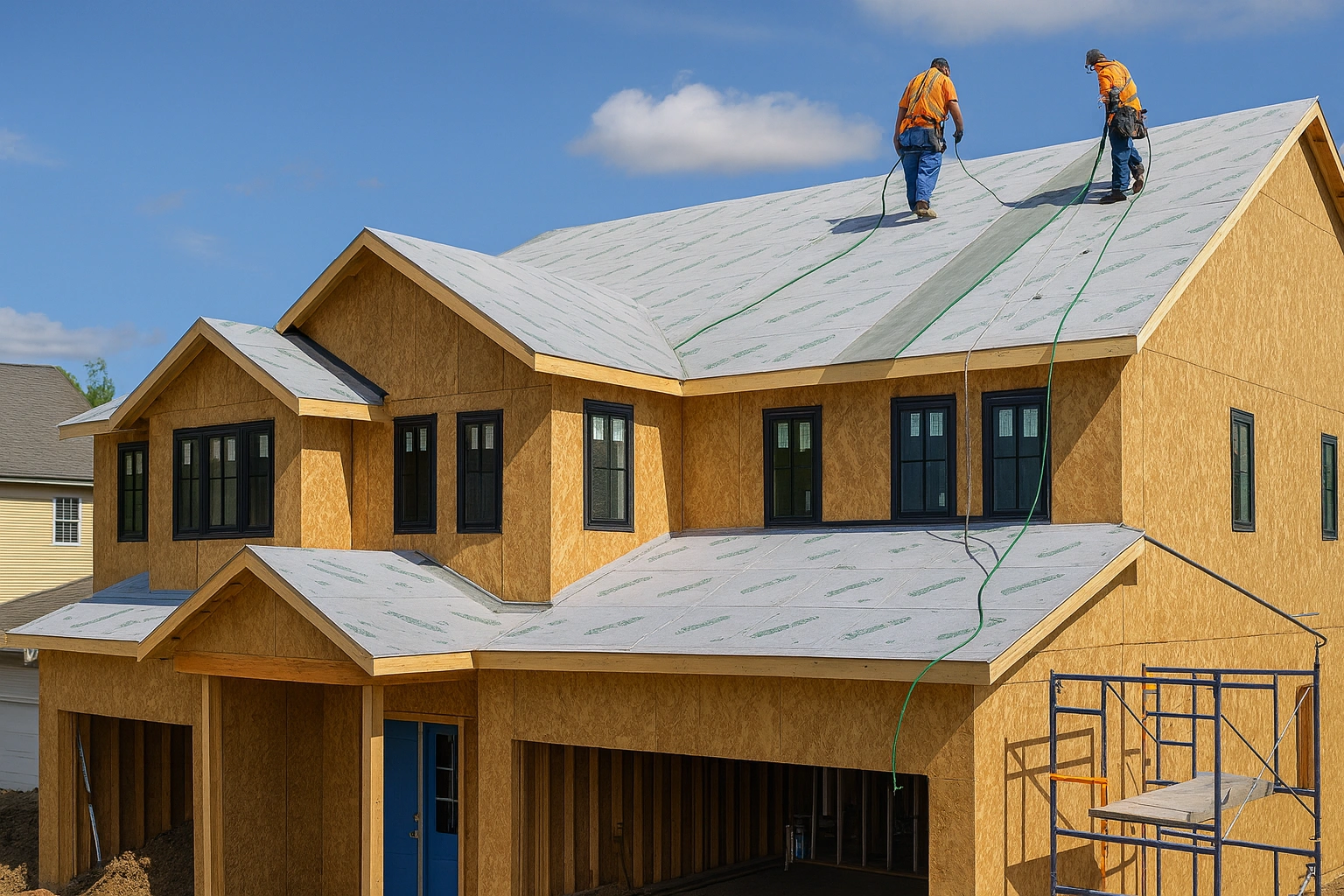
The roof protects your home from the elements and plays a major role in energy efficiency. We design and install roofing systems for Los Angeles luxury homes and commercial buildings, specifying durable materials and proper flashing, waterproofing and ventilation details.
Why the Roofing Process Matters
A roof is more than shingles or membrane. It is a complete system made up of structure, underlayment, flashing, penetrations, ventilation and finished materials. When each piece is designed and installed correctly, the building stays dry, comfortable and efficient for years. When shortcuts are taken, leaks, premature failures and comfort issues tend to show up quickly.
As a design-build contractor, R Builders ties the roofing process directly into architectural design, structural engineering and mechanical planning so that all systems work together instead of fighting each other.
Evaluating Roof Type & Project Goals
Different projects call for different roofing assemblies. On Los Angeles custom homes and commercial spaces, we often consider:
- Low-slope / flat roofs with TPO, PVC or modified bitumen membranes.
- Pitched roofs with concrete or clay tile, composition shingles or standing seam metal.
- Cool roof options to meet Title 24 energy standards and reduce heat gain.
- Integrated roof decks and outdoor living areas on top of conditioned spaces.
The choice of roofing system depends on architecture, energy goals, budget, maintenance expectations and how the building will be used day to day.
Substrate, Sheathing & Slope
A roofing system is only as good as the deck it sits on. Before any underlayment or membrane is installed we verify that:
- Sheathing is properly fastened and rated for the span and loads.
- Slopes meet manufacturer and code requirements for drainage.
- Transitions, crickets and saddles are framed to move water away from walls and penetrations.
- Decks over living space are detailed for both waterproofing and insulation needs.
On commercial design projects, we pay particular attention to drainage points and future access for mechanical equipment.
Underlayment & Waterproofing Layers
Underlayment and waterproofing layers provide the primary defense against water intrusion. Depending on the roof type, these may include:
- Synthetic or felt underlayment beneath shingles or tile.
- Self-adhered waterproofing membranes at valleys, eaves and critical transitions.
- Single-ply membranes or multi-ply systems on flat roofs.
- Specialty deck coatings under tile or pavers on roof decks.
We follow manufacturer installation guidelines and local codes carefully, because these layers are what ultimately keep the structure dry during heavy storms.
Flashing & Penetration Details
Most roof leaks occur at transitions and penetrations, not in the middle of the field. That is why flashing details are a major focus of our roofing process. We pay attention to:
- Step flashing and counterflashing at walls and chimneys.
- Properly sized and sealed roof jacks at plumbing and mechanical penetrations.
- Crickets behind chimneys and large vertical elements.
- Parapet cap flashing and terminations on flat roofs.
These details must be coordinated with stucco, siding, stone and mechanical trades so no one compromises the waterproofing after it is installed.
Ventilation, Insulation & Energy Performance
The roof assembly has a significant impact on comfort and energy use. A well-designed roofing system controls heat, moisture and airflow. On our projects we consider:
- Intake and exhaust vents sized correctly for attic or rafter spaces.
- Insulation strategy — vented attic, unvented assembly, or rigid insulation above the deck.
- Cool roof materials that reflect more solar energy in hot Los Angeles summers.
- Coordination with HVAC equipment located in or on the roof assembly.
Getting these details right reduces hot spots, ice-cold rooms under poorly insulated decks and excessive HVAC run times.
Material Selection for Long-Term Durability
For luxury homes and commercial buildings, roof materials must look good and perform over the long term. We help clients weigh options such as:
- Tile roofs for classic aesthetics and longevity.
- Architectural shingles as a cost-effective but attractive solution.
- Standing seam metal for a modern look and excellent durability.
- TPO or PVC membranes on commercial and flat roof assemblies.
Our recommendations are shaped by local climate, building exposure, surrounding architecture and maintenance considerations.
Commercial Roof Considerations
Commercial and mixed-use buildings often have additional demands on their roofing systems. These can include:
- Large mechanical units and curb-mounted equipment.
- Walkways and pavers for maintenance access.
- Higher occupancy loads on roof decks and amenity spaces.
- More complex drainage and overflow requirements.
On commercial design-build projects, we coordinate closely with architects, engineers and mechanical trades to make sure the roof can handle these uses without compromising waterproofing.
Inspections, Testing & Quality Control
Roofing work is inspected at several stages. Our quality control process often includes:
- In-progress checks on underlayment, flashing and fasteners.
- Flood testing or hose testing of critical areas on flat roofs and decks.
- Final walkthroughs with the roofing contractor and superintendent.
- Documentation of warranties, product data and maintenance guidelines.
This documentation gives owners and property managers a clear record of what was installed and how to care for it over time.
Planning a Roofing Project in Los Angeles?
Whether you are designing a new luxury home, renovating an existing property or planning a commercial building, the roofing process should be part of the early conversation. A well-designed roofing system protects your investment and supports energy performance for decades.
Call R Builders, Inc. at 1 (800) 520-5008 or visit our consultation form to schedule a consultation about roofing design, replacement or new construction in Los Angeles.
Disclaimer: This article is for general informational purposes only and does not replace project-specific roofing design, engineering or professional advice. Always consult with licensed roofing contractors and follow local codes and manufacturer instructions for your specific project.